
Navigating money, the Pacific way
What if the starting point for teaching young people about money wasn’t a worksheet on budgeting, but the skills and values of their ancestors? That’s the idea behind Moana Money, a financial education programme for Pacific high school students that AMPLIFY is supporting in Te Waipounamu.
Developed by Tagata Moana Trust and led by Poasa Alaifea (Sālesātele, Faleālili and Matāvai, Sāfune), Moana Money aims to meet the needs of one of the Ministry of Education’s priority learning groups: Pacific young people. It is built on the belief that financial capability shouldn’t start with what’s missing, but with what’s already there - in this case, the existing strengths of Pacific families and communities.
Navigators by nature
“Pacific communities have navigated oceans, built nations, and raised some of the world’s most effective fundraisers,” says Poasa, a former financial adviser. “And yet we’ve too often been described through what we lack, rather than what we bring when it comes to financial capability.”
Moana Money sets out to flip that framing, drawing a direct line between the resourcefulness already present in Pacific culture - raising funds for extended family and community events, organising large gatherings, protocols of care passed down through generations - and the skills and confidence needed to navigate money.
Inside the programme
Developed specifically for Pacific young people in Years 9-13, Moana Money is delivered in schools over six weeks. Two-hour sessions work through familiar topics like Money Mindset, Budgeting and Financial Planning, Understanding Finance and Debt, and Growing Wealth through Smart Investments, aiming to leave students able to:
● Make informed financial decisions.
● Actively participate in the economic aspects of life.
● Enhance their financial well-being.
What sets the programme apart is how it’s built. It has been shaped through ongoing co-design with Pacific communities in Ōtautahi Christchurch, and is delivered entirely by Pacific trainers who bring their own experience of money, culture and family into the room. The intent is explicit: build financial confidence and capability while strengthening, rather than displacing, Pacific identity and the obligations of āiga (whānau) and community that come with it.
A philosophy of empowerment
Poasa explains that the ancient Sāmoan proverb “E fofō le alamea, le alamea” speaks to the ethos underpinning the programme: “It is said among Sāmoan fishermen that if you are stung by the sharp spines of the alamea (crown of thorns starfish) you should flip the starfish over and press its soft, spongy underside against the wound to draw out the poison and soothe the pain. Metaphorically, this reminds us that no matter the challenges or adversity we face in life, the remedy lies within ourselves. In the same way, we need Pacific solutions for Pacific challenges when it comes to financial capability. Culturally responsive programming is imperative.”
What’s changing
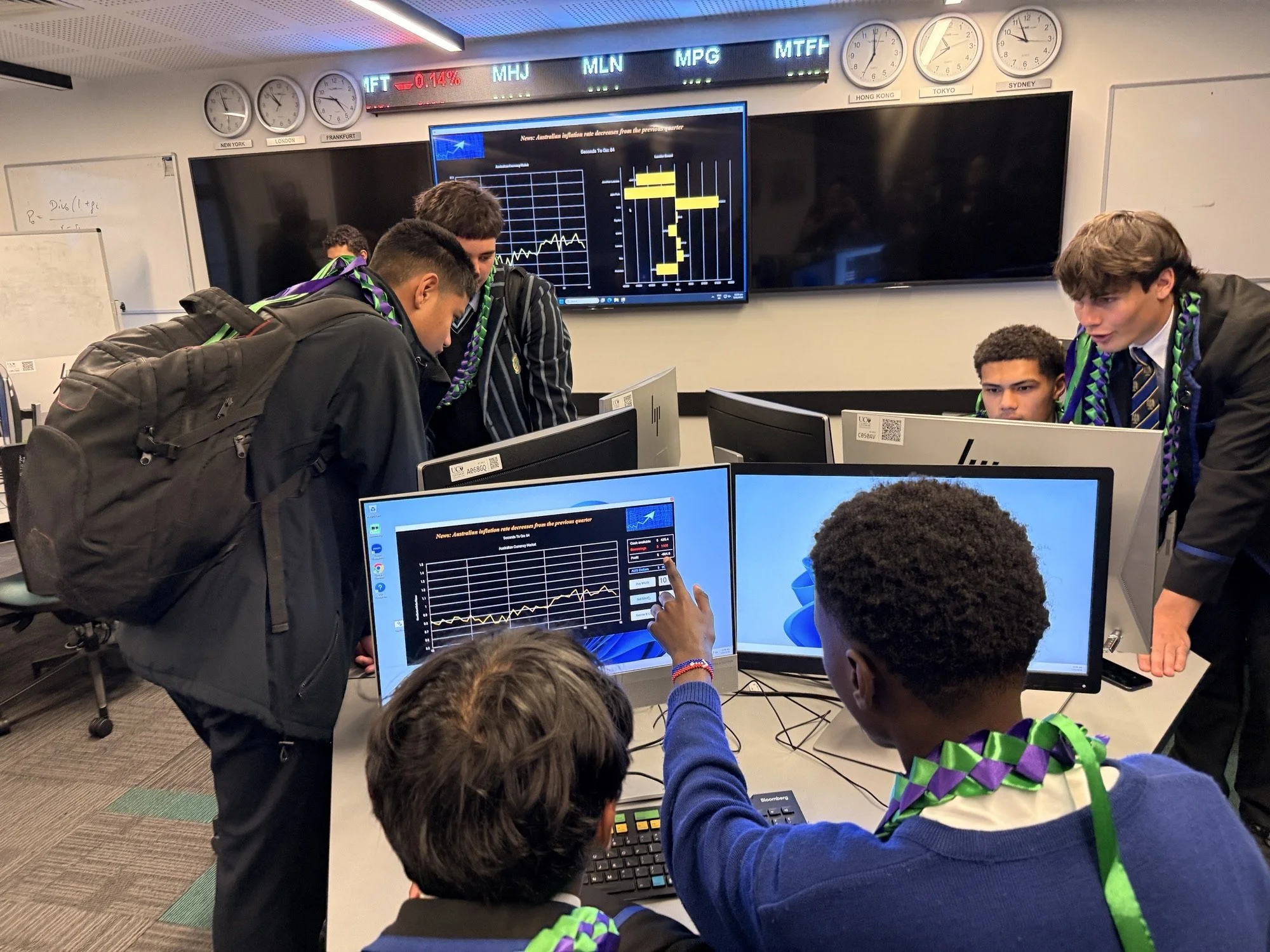
Four years into delivery, Moana Money is now generating clear evidence that the programme changes behaviour, not just what students know but what they do. The programme partners with UC Business School (University of Canterbury) to support impact measurement and sector learning. At a recent celebration marking the completion of the programme, more than 60 students from five Christchurch secondary schools toured the university campus and took part in a stock market trading simulation. One group turned a virtual ten dollar investment into two thousand dollars in just ten minutes, a vivid example of how quickly financial concepts can come to life.
Other financial education programmes often look at the frequency of money conversations at home as a marker of success - the assumption being that parents raise it, and children pick it up. For Moana Money, Poasa has noticed the relationship runs the other way: it's the young people who bring the conversation home, and often the parents who are learning. One student went home and talked her mother out of taking up a store card after recognising it as a debt trap. Another has been saving twenty dollars a week for eight months to build the balance for his first investment account.
Evolving demand
The programme has also evolved in response to what trainers are seeing on the ground. After identifying exposure among students - including an underground gambling ring operating at one Christchurch school - Moana Money added modules on scams and gambling harm. Demand has grown too: alongside the core six-week programme, a voluntary Saturday social money club now runs for young people who want to keep talking about money once the formal sessions are over.
“Pacific rangatahi have such curiosity, openness and willingness to learn and they descend from greatness. If we can channel that it could really spark something extraordinary,” says Poasa.
Tagata Moana is currently delivering Moana Money across eight Canterbury and South Island schools, scaling to 16 groups this year, and with a longer-term vision to extend nationwide through a digital platform and train-the-trainer model. Find out more here.